District of Columbia cryptocurrency fraud reporting requirements
A complete guide to District of Columbia cryptocurrency fraud reporting requirements, regulatory authorities, court remedies, and statutes of limitations.
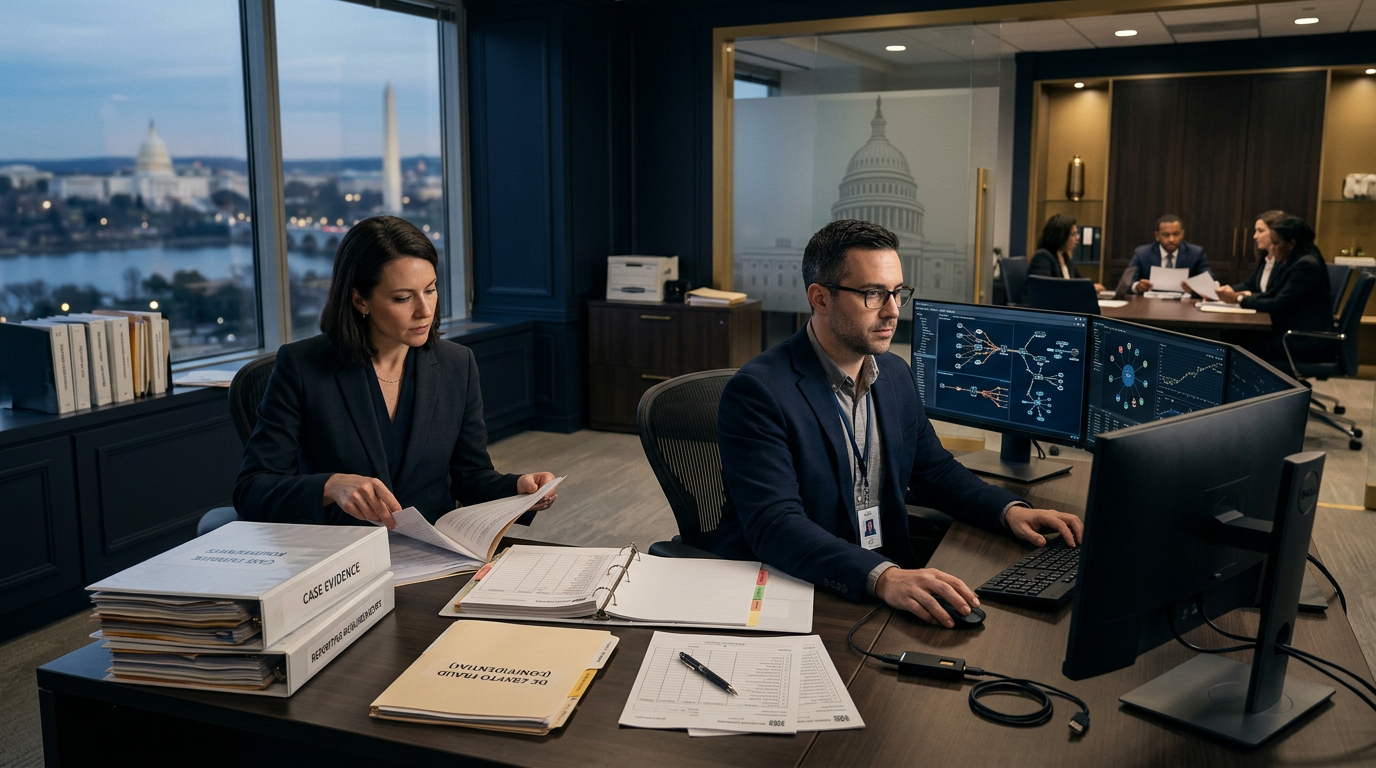
Digital Asset Regulatory Oversight in the District of Columbia

Navigating the District of Columbia cryptocurrency fraud reporting requirements requires understanding how federal jurisdiction intersects with District-level financial oversight. In the District of Columbia, digital asset activities, virtual currency businesses, and crypto-related transactions fall under a multi-agency regulatory perimeter. The primary local entity overseeing financial services is the District of Columbia Department of Insurance, Securities and Banking (DISB). Under the District of Columbia Money Transmitters Act (D.C. Code § 26-1001 et seq.), entities engaging in money transmission—which includes receiving money or monetary value to transmit to another location—must obtain a license unless exempt.
While virtual currency is not explicitly defined as fiat legal tender under DC statutory law, DISB evaluates crypto exchanges, custodial wallet providers, and OTC desks based on their operational touchpoints within Washington, D.C. In addition to DISB, the Office of the Attorney General for the District of Columbia (OAG) enforces consumer protection mandates under the District of Columbia Consumer Protection Procedures Act (CPPA), codified at D.C. Code § 28-3901 et seq. Victims seeking financial recovery must act rapidly by utilizing an established on-chain fund tracing methodology to establish the exact path of stolen assets before initiating administrative or judicial complaints.
Because the District serves as the seat of the United States federal government, local financial crime investigations frequently involve coordination with federal law enforcement, including the United States Attorney’s Office for the District of Columbia (USAO-DC) and the FBI’s Washington Field Office (WFO). Aegis Financial Forensics maintains its principal headquarters at 48 Wall Street, 11th Floor, New York, NY 10005, and works remotely alongside local District of Columbia legal counsel to provide specialized technical reports for judicial proceedings.
District of Columbia Cryptocurrency Fraud Reporting Requirements
When a victim or compliance team discovers stolen digital assets within Washington, D.C., satisfying all applicable District of Columbia cryptocurrency fraud reporting requirements is essential for preserving legal remedies and assisting law enforcement. Fraud reporting follows a tiered structure involving state regulatory authorities, local law enforcement, federal databases, and civil court filings.
To report cryptocurrency fraud effectively in the District of Columbia, victims should execute the following administrative reporting steps:
- File a Complaint with the DISB Securities Division: Victims should submit a detailed complaint to the DISB Securities or Banking Division detailing fraudulent investment schemes, unlicensed money transmission, or unauthorized account liquidations.
- Report to the Metropolitan Police Department (MPD): Obtain an official police report from the MPD Financial Crimes District. A formal police report is required by centralized exchanges before they will process emergency administrative freezes.
- Submit a Federal IC3 Report: Complete a detailed filing with the FBI Internet Crime Complaint Center (IC3), explicitly listing receiving wallet addresses, transaction hashes (TXIDs), and communications logs.
- Notify Federal Authorities: For large-scale exploits, coordinate filings through the Federal Trade Commission (FTC) and the Commodity Futures Trading Commission (CFTC) or SEC depending on the token classification.
Proper compliance with federal and state reporting pipelines ensures that official agencies record the illicit transaction history. For broader context on nationwide reporting structures, view our guide on federal crypto reporting mechanisms and review the Aegis forensic investigation methodology.
DC Statutes of Limitation and Available Civil Remedies
Victims pursuing civil litigation in Washington, D.C. must adhere strictly to statutory deadlines. In the District of Columbia, the statute of limitations for common law fraud, misrepresentation, and conversion is three years under D.C. Code § 12-301(8). Actions arising under the District of Columbia Securities Act (D.C. Code § 31-5606.05) must generally be brought within three years from the date of the contract of sale or two years after the discovery of the facts constituting the violation, whichever expires first.
Civil litigants seeking asset freezing or restitution in D.C. courts can leverage several equitable and legal remedies:
- Ex Parte Temporary Restraining Orders (TRO): Filed in the Civil Actions Branch of the Superior Court of the District of Columbia or the U.S. District Court for the District of Columbia to freeze assets held at compliant exchanges.
- Constructive Trusts: Requesting the court to place an equitable constructive trust over traced wallet addresses holding stolen funds.
- Writs of Attachment Before Judgment: Pursuant to D.C. Code § 16-501, securing pre-judgment attachments on accounts controlled by identified bad actors or intermediary platforms.
- Civil CPPA Claims: Seeking treble damages and attorney fees for unfair or deceptive trade practices under D.C. Code § 28-3905.
For detailed guidance on injunctive filings, read our analysis on asset freezing and injunctive remedies as well as using expert forensic reports in court litigation. Litigants seeking assistance with crypto recovery in the District of Columbia must ensure that all forensic artifacts meet strict rules of evidence.
Frequently Asked Questions
How do I report crypto fraud in the District of Columbia?
Report cryptocurrency fraud in the District of Columbia by filing a complaint with the Department of Insurance, Securities and Banking (DISB), obtaining a police report from the Metropolitan Police Department (MPD), and submitting a federal report to the FBI’s Internet Crime Complaint Center (IC3) with all relevant wallet addresses and transaction hashes.
What is the statute of limitations for cryptocurrency fraud in DC?
The statute of limitations for common law crypto fraud and conversion in Washington, D.C. is three years under D.C. Code § 12-301. For statutory securities fraud under the D.C. Securities Act, claims must be brought within three years of the sale or two years from discovery, whichever occurs first.
Can DC courts freeze stolen cryptocurrency held on central exchanges?
Yes. DC Superior Court or the federal District Court for the District of Columbia can issue Ex Parte Temporary Restraining Orders (TROs) and preliminary injunctions compelling centralized exchanges with US nexus to freeze customer accounts or specific wallet deposits associated with documented theft.
Practical Compliance Checklist for DC Fraud Victims
Victims of digital asset theft in Washington, D.C. should proceed systematically through the following checklist to protect their legal standing:
- Preserve On-Chain Evidence: Export unedited transaction records, blockchain explorer URLs, sender/receiver public keys, and timestamps.
- Document Off-Chain Communications: Secure email threads, Telegram logs, WhatsApp messages, domain names, and payment receipts.
- Conduct Professional Blockchain Tracing: Engage certified forensic analysts to produce a formal court-admissible tracing report mapping asset movement across mixing services, bridges, and off-ramps. Learn more about blockchain forensic evidence parameters.
- File Formal Administrative Complaints: Submit official reports to DISB, MPD, and federal IC3 databases within 72 hours of incident discovery.
- Engage Local Legal Counsel: Retain licensed legal counsel qualified to practice in the District of Columbia to draft emergency injunctive applications.
Warning on Recovery Scams: Aegis Financial Forensics never guarantees fund recovery or promises specific legal outcomes. Be cautious of fraudulent secondary entities claiming they can guaranteed-hack smart contracts or return stolen crypto for an upfront fee. Legitimate recovery requires formal forensic tracing combined with lawful subpoena power and court orders.
Related Reading in This Series
- How to Report Crypto Scam in the US: Step-by-Step
- Crypto Asset Freezing Order: Preparing Injunctive Relief
- Blockchain Forensics: What It Proves and Its Real Limits
What to Do Next
If you or your client have suffered significant cryptocurrency loss within the District of Columbia, immediate action is critical. Contact Aegis Financial Forensics today to submit a confidential forensic intake request. Our team will evaluate your transaction logs, perform initial hop-tracing, and deliver rigorous evidentiary documentation to support law enforcement filings and civil court proceedings.