Crypto Recovery Near Me Manhattan: Local Forensic Guide
Victim of crypto fraud in Manhattan? Learn how remote blockchain tracing works alongside New York state courts and federal law enforcement to track stolen assets.

Navigating Crypto Recovery Near Me Manhattan: Digital Assets and Local Law
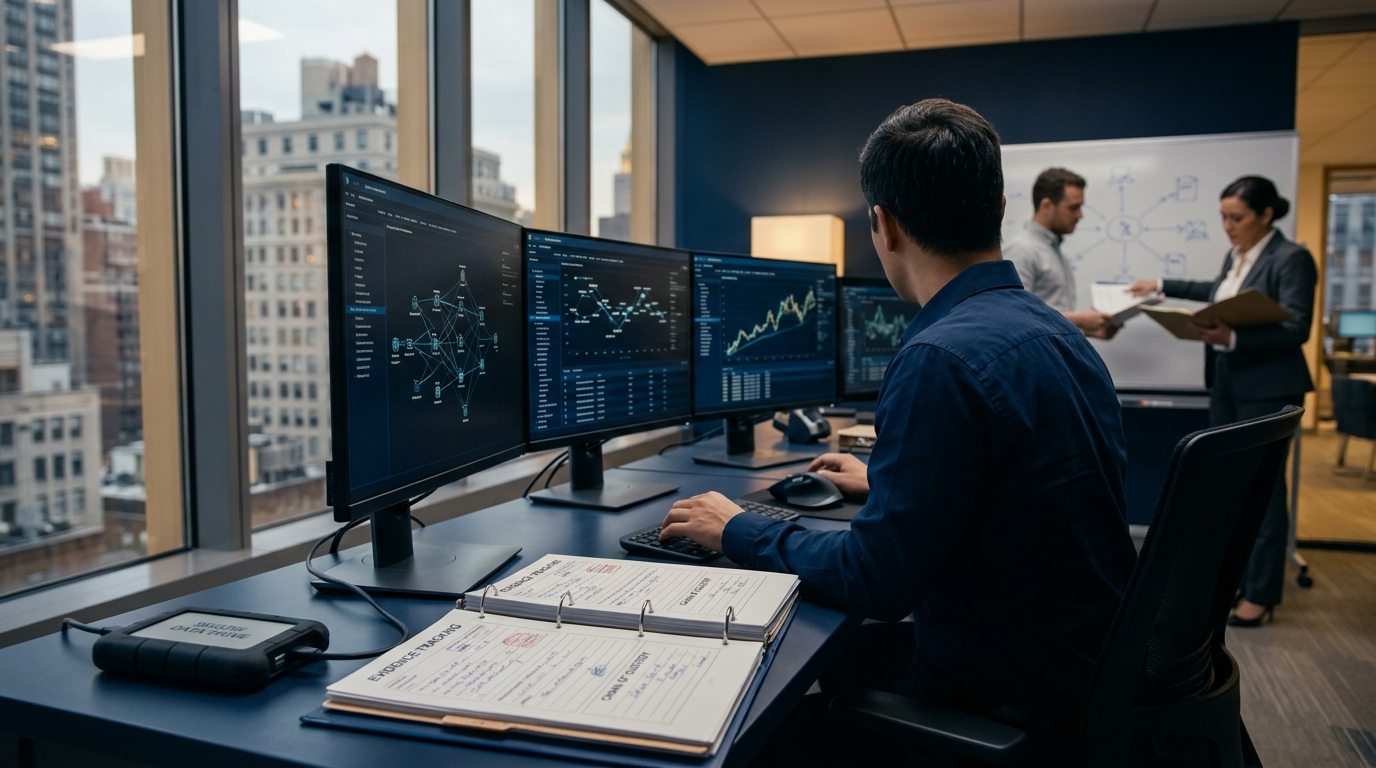
If you are searching for crypto recovery near me Manhattan after discovering unauthorized transactions, stolen private keys, or fraudulent investment platforms, timing and strategy are critical. Manhattan is global finance's epicenter, but when cryptocurrency assets disappear from a self-custody wallet or exchange account, the forensic pathway spans both decentralized networks and local judicial jurisdictions. Forensic investigators must identify the destination addresses across public ledgers while preserving legally admissible evidence. To understand how initial blockchain analysis establishes ownership chains, consult our comprehensive guide on how to trace funds after a scam.
What 'Near Me' Means for a Remote-Capable Forensic Engagement
When Manhattan residents and institutions search for digital asset tracing, the concept of proximity is often misunderstood. Blockchain tracing is fundamentally a digital, data-driven discipline. Investigating a high-value cryptocurrency theft does not require physical possession of a hard drive in most cases, nor does it require in-person meetings for initial chain analysis. Our principal investigative operations are centered at 48 Wall Street, 11th Floor, New York, NY 10005, putting us in direct proximity to the premier legal and financial district in the world. However, the technical work of tracing Bitcoin, Ethereum, Solana, or stablecoins across decentralized protocols takes place in secure digital forensic environments.
For victims seeking crypto recovery in New York, local presence matters primarily for legal coordination. A forensic report must align with the evidentiary standards required by federal and state courts located right here in New York County. While our blockchain investigators conduct remote tracing across global nodes, mixers, cross-chain bridges, and centralized exchanges, our reports are tailored for presentation to local law enforcement, private litigators, and state or federal prosecutors. Having a team that understands local statutory procedures ensures that forensic output translates directly into actionable legal proceedings.
Manhattan Neighborhood Context and Local Legal Venues
Whether a fraudulent transaction originates from an office in Midtown, a residential apartment in Tribeca, the Upper East Side, Chelsea, or the Financial District, the local legal architecture remains identical across the borough of Manhattan. Stolen assets frequently traverse foreign infrastructure, but legal leverage often starts in New York courts. When victims file emergency applications to unmask anonymous wallet owners or restrain illicit funds held on domestic exchanges, specific local entities and courts become involved:
- New York County Supreme Court (Civil Term): Located at 60 Centre Street, this venue handles pre-action discovery petitions under CPLR § 3102(c) to subpoena exchanges and obtain identity logs (KYC) prior to filing formal complaints.
- United States District Court for the Southern District of New York (SDNY): Operating out of the Thurgood Marshall U.S. Courthouse and 500 Pearl Street, SDNY frequently handles federal fraud litigation, asset forfeiture actions, and international discovery requests under 28 U.S.C. § 1782.
- Manhattan District Attorney's Office (Major Economic Crimes Bureau): Responsible for investigating criminal enterprise, financial fraud, and cyber-enabled theft originating within or impacting New York County.
- New York State Department of Financial Services (NY DFS): Located on State Street, NY DFS regulates Virtual Currency Businesses (BitLicense holders), establishing strict compliance and subpoena response requirements for regulated exchanges.
Victims residing in adjacent areas should also consider regional jurisdictional nuances. For instance, if your case involves assets linked to outer borough entities, review our detailed guide on crypto recovery near me in Brooklyn to understand Kings County legal procedures.
What You Can Start Today Without Leaving Home
Immediate action taken from your home or office in Manhattan can significantly influence the viability of a forensic investigation. The first hours following a theft are critical for locking down compromised vectors and capturing fleeting digital evidence before log files expire or wallet clusters obfuscate funds. Follow these initial steps immediately:
- Isolate Affected Systems and Wallets: Disconnect infected computers or mobile devices from Wi-Fi and cellular networks. Never enter seed phrases or private keys into any online interface. If a wallet was compromised, review our mandatory wallet compromise protocol for the first 72 hours to secure remaining accounts.
- Export Raw Transaction Hash Data: Collect exact Transaction Hashes (TXIDs), complete deposit/withdrawal wallet addresses, token contract addresses, and timestamps. Avoid relying solely on screenshots; record exact alphanumeric strings.
- Preserve Communication Logs: Save unedited export files of Telegram chats, WhatsApp threads, email headers, website URLs, and domain details associated with the fraudulent platform.
- Document Exchange Interactions: If funds moved through major platforms, document all transfer details. For thefts involving offshore or tier-one platforms, read our guide on reporting scams on Binance to understand exchange-specific preservation demands.
- Request Professional Forensic Tracing: Secure a specialized firm to compile a structured record of fund movements. Discover how detailed court-admissible forensic reports allow legal counsel to file emergency freeze applications.
How to Verify Any Firm You Find Locally
Search engines often yield sponsored listings for fraudulent firms promising immediate, guaranteed fund retrieval. Manhattan victims must exercise extreme diligence when evaluating forensic service providers. Real blockchain forensics relies on rigorous mathematical analysis of public ledgers and formal legal escalation—never secret hack-back techniques or automated software fixes.
"Any entity guaranteeing the return of stolen cryptocurrency or requesting upfront fees to 'unlock' assets on a blockchain is operating a secondary recovery scam."
To verify the legitimacy of any cryptocurrency forensic firm operating in or serving the New York area, verify these essential indicators:
- No Guarantees of Recovery: Reputable firms analyze data objectively. They provide certified evidence for legal counsel and law enforcement but never guarantee specific financial outcomes.
- Transparent Methodologies: Legitimate firms utilize institutional-grade intelligence software (such as Chainalysis, Elliptic, or TRM Labs) combined with custom off-chain intelligence. Learn more about our analytical standards by reviewing our public forensic tracing methodology.
- Legal and Regulatory Literacy: The firm must understand how forensic findings integrate with New York civil procedure (CPLR), federal subpoenas, and international letters rogatory.
- Physical Verifiability: Verify established office locations, professional credentials, and direct integration with licensed attorneys rather than anonymous web forms or call centers.
Frequently Asked Questions
Can local Manhattan law enforcement help recover scammed cryptocurrency?
Local law enforcement, including the Manhattan District Attorney's Major Economic Crimes Bureau and NYPD precinct cyber units, can initiate criminal investigations. However, law enforcement agencies face severe caseload constraints. Providing police with a professionally compiled, court-ready blockchain forensic report significantly accelerates their ability to issue subpoenas and execute freezing orders.
How long does a crypto forensic investigation in Manhattan take?
An initial forensic trace and transaction mapping phase typically takes between 3 to 7 business days, depending on transaction complexity, cross-chain bridging, and mixing protocols. Subsequent legal steps—such as obtaining subpoenas from New York state or federal courts to unmask exchange accounts—can extend the overall process over several months.
Do I need to meet a forensic investigator in person at Wall Street?
In-person meetings at our 48 Wall Street office are available by appointment, but they are not required to commence an investigation. Secure digital intakes, encrypted file transfers, and remote video consultations allow our team to begin tracing stolen assets immediately, regardless of your physical location.
Related Reading in This Series
- Wallet Compromise: The First 72 Hours That Decide Your Case
- Crypto Recovery Near Me Brooklyn: Local Forensic Guide
- Binance Scam Reporting: What Victims Need to Know
- Pig Butchering Scam Recovery: What Forensics Can Do
What to Do Next
If you have lost assets to a cryptocurrency scam, unauthorized wallet transfer, or investment fraud in Manhattan or the surrounding tri-state area, immediate action is vital to trace moving funds. Contact our senior forensic analysts for a confidential assessment of your case. Visit our intake page to submit transaction details securely and evaluate your legal and forensic options.